




A Letter from Our Director: Responding to the Needs of Conservation with Flexibility, Capability, and Patience
Happy Winter!
Fresh off the trail at Circle Creek Habitat Reserve, my heart is full. There’s nothing quite like 20 joyful fourth graders squealing about the “beaver waterfall,” and “all the bugs and spiders,” and rainbow light filtering through the leaves to bring meaning to a day’s work. My favorite comment came from a little boy, after he quietly got down close to the grass. “Oh my gosh,” he said, “Look at all the fluorescent colors on the grasshopper! I had no idea they were so beautiful!” Frankly, neither did I until he showed me. It was beautiful. It was a day to remember, and one we’ve worked towards for many years: hosting field trips at Circle Creek for all Pacific Ridge Elementary School fourth graders to engage in nature exploration and journaling. Plus, along with five classes of fourth graders tromping around at Circle Creek, we have five separate conservation acquisition projects that have been completed, or that we expect to complete by year’s end. Five! Needless to say, between supporting a strong land ethic in our future stewards and leaders through the field trips and completing an unprecedented number of land purchases, this has been an extraordinary year for North Coast Land Conservancy.
Never before have we had so many high-priority acquisitions approaching their culmination in such a small window of time. Plus, they are scattered throughout our service area, in unique settings, from the ancient cedar swamps along the lower Columbia River and the floodplains of the Necanicum River to the Neacoxie Wildlife Corridor that meanders across plains and through dunes. Getting to work in this variety of ecosystems—and these being the first acquisitions since we conserved the Rainforest Reserve in October 2021—makes them feel extra exciting. It’s so fun to be able to tell you that important coastal lands and waters within our region have been conserved, forever.
These five projects also touch on the three pillars of our long-term vision, outlined in the 20-year conservation plan we adopted last year: climate resiliency, habitat connectivity, and community conservation. The Second Street Gearhart Habitat Reserve, which we acquired in September, is a prime example of all three. The two parcels included in this conservation project, amounting to approximately 0.74 acres, are located along Neacoxie Creek in the City of Gearhart, part of a narrow but still mostly intact wildlife corridor that is extremely important for elk, otters, fish, birds, and other wildlife. We were able to enhance habitat connectivity along the Neacoxie Wildlife Corridor by conserving this land.
The reason that project moved so fast was because this small but magnificent forest along Neacoxie Creek is beloved by the Gearhart community. It is a backdrop for their homes, neighborhoods, and special outdoor spaces. The community really rallied around this effort and came together in an inspiring way, investing their passion and donations and enabling us to get the project done very quickly. We were thrilled to partake in such a community-led initiative—especially one that protects coastal riparian forest. We now know that Oregon’s coastal riparian forests are globally critical in the fight against climate change. There we have it: connectivity, climate, and community, coming together in a singular way to benefit all the creatures who rely on the ecological systems in this area. Additionally, another wonderful opportunity is emerging that will allow us to expand protections along Circle Creek. We’ll keep you posted on that one!
Along with field trips, and tidepool ambassadors at Cape Falcon Marine Reserve, and tree planting, we generally have a dozen or so acquisition projects humming along in the background at any given time. These range from individuals inquiring about donating their land, to acquisitions we are actively pursuing, fundraising for, and negotiating. At the end of the day, land deals are complex and each one is unique, affected by a number of variables and particulars. Different landowners, different partnering agencies, different funding mechanisms, different geographical regions. These all come into play and impact the feasibility of an acquisition, as well as the timeline. We never know, for certain, the timing of them all. But we do know your ongoing support allows us to stick with each opportunity, for as long as it takes.
If we have to plug away at a project for several years—building relationships with landowners, finding the best partners, waiting for the right time to close—we can do so, because we have the steadfast support of our community. Likewise, when things come together exceptionally fast, as was the case for some of the acquisitions this year, we also have the capacity to comfortably handle them all at once. A few years ago, that wouldn’t have been the case. We didn’t have the staff and capacity to respond swiftly, raising funds and working through transactional logistics with the sense of urgency required in these circumstances. It’s exciting that we can be so responsive when high-priority opportunities arise, thanks to you!

We feel so lucky to be living and working in this area, bolstered by a group of tenderhearted humans so we can nurture a caring relationship with the Earth, our lands and waters, and the children to whom we will leave it all. It reminds me of a recent writing by our Communications Manager, Kate Lacaze, entitled “Touch Sand,” about connecting with nature on the Oregon Coast. In the article, she references the Gen Z idiom, “touch grass,” which I heard my son say to a friend just this weekend. It is a way of saying people have lost touch with reality and they should probably go outside to rectify the problem. Although it is often used in a joking way, or even as a lighthearted jab, seeing all those fourth-graders touching grass for real, and with utter delight, was a good reminder of the importance, for us all, of connecting with the tangible.
“Real life happens outside of our phones, our computers, and other devices. But as our reliance on technology increases, so does the weight and urgency of actually following through with this two-word appeal,” Kate writes. “When we step outside, press our feet into spongy grass or soft sand, let our lungs expand with fresh air, feel the sun or rain soaking into our skin, cross paths with all manners of wildlife, or sit embalmed in the comforting shade of our favorite tree, we’re reminded of what’s truly important in life.”
“Clean water, fresh air, the mountains, the beaches and estuaries, the wetlands, the fields used to grow food and tend to livestock, those are real. We have everything we need to survive and thrive within the ecosystems that support us on the Oregon Coast. They are here, openly embracing us and offering us life—real life,” she continues. “That’s why we’re emphatically invested in their conservation. By preserving and stewarding them, we better enable them to last, continuing to function in the perfect ways that they inherently do. There is no substitute for the relationships built when we are actually together—or better yet, together in nature.”
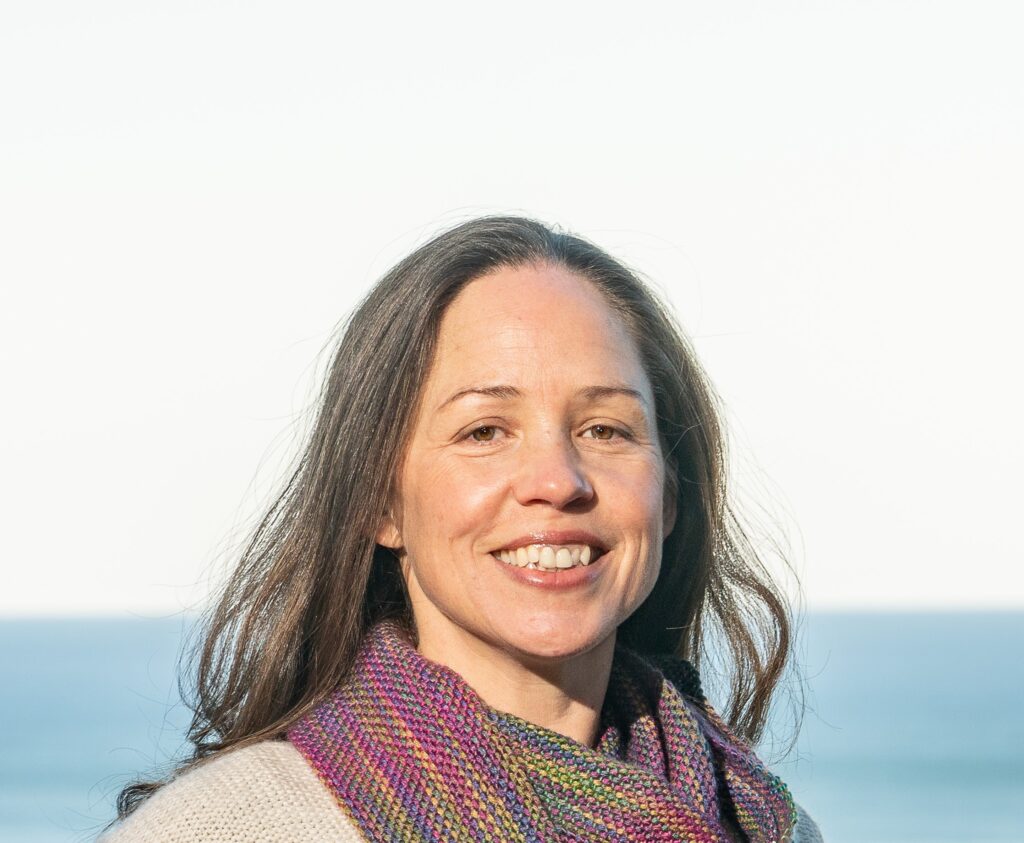
Because of you, we can stay grounded in our reality, steadily striving every day to do the on-the-ground work necessary to make a tangible difference on the Oregon Coast and build long-lasting relationships with the people and the lands and the waters that we love.
With love and gratitude,
Katie Voelke
Executive Director
P.S.
If you’d like to read the whole article written by Kate, it’s still available on our website at NCLCtrust.org/news/touch-sand.
Comments